Cubanidad /:/n between

Artes, Identity, Alternative Cultural Scenes, Cuba Transnacional...

Labels

  • Entrevistas
  • Events
  • Miami

Wednesday, April 22, 2015

Notes & Neurons: In Search of the Common Chorus

Posted by Dr. Eva Silot Bravo at 11:12 AM No comments:
Email ThisBlogThis!Share to XShare to FacebookShare to Pinterest
Labels: Music

Wednesday, March 4, 2015

Contigo en la distancia- Del escritor Ahmel Echevevarria sobre autores cubanos de la Generación O

publicado originalmente en cubacontemporanea

Imagen de ahmelContigo en la distancia
Por Ahmel Echevarría. 4 Mar 2015 


Propiciar el desplazamiento físico y mental, ejecutar entonces la disección, el análisis. El mar de por medio, gélido invierno. Temperaturas por debajo de cero en la escala de los grados Celsius. Silencio. Blanco el paisaje. ¿Son estas las condiciones ideales para entender un fenómeno… un fenómeno literario gestado al interior de un archipiélago donde incluso en pleno invierno el calor, cuando el sol cae vertical, no solo te dora, también te asa?
Pongamos por delante la calma, la manera exacta de nombrar. Analizar, en el cálido clima de una habitación en una ciudad casi helada (la de un hotel llamado Old Court -bed and breakfast- en Providence, Rhode Island), un grupo de escritores que han sido reunidos bajo una etiqueta: Generación Cero -jóvenes, en su mayoría viven en la isla mayor de un tórrido archipiélago: Cuba.
Generación CeroNo es exactamente un fenómeno literario; digamos mejor: maneras de leer, de asociar, escribir. Diferentes maneras de establecer líneas de fugas, alianzas. Agenciarse su propia tradición o su propia noción del campo literario, del mundo.
Esta es una manada de escritores que casi siempre andan en solitario. Tal parecen tener más diferencias que similitudes. ¿Una suerte de paradoja? Comenzaron a reunirse en los “años ceros”, es decir, iniciándose la primera década del nuevo siglo y milenio: del 2000 al 2010. En esa década aparecerían sus primeros libros.
Un paréntesis para La Lista: Legna Rodríguez, Anisley Negrín, Osdany Morales, Abel Fernandez-Larrea, Agnieska Hernandez, Orlando Luis Pardo Lazo, Jorge Enrique Lage, Raúl Flores Iriarte, Michel Encinosa Fú, más un breve etcétera.
De los autores de la Generación Cero más atendidos por la crítica, rápido y mal comienzo a nombrar una suerte de genealogía nacional que les interesa: Lorenzo García Vega, Miguel Collazo, Carlos Montenegro, Virgilio Piñera, Guillermo Rosales, Ángel Escobar, Guillermo Cabrera Infante, José Lezama Lima, Calvert Casey, Enrique Labrador Ruiz, Reinaldo Arenas, José Kozer… Los puntos suspensivos para no absolutizar, para no perpetrar una serie cerrada que daría paso a una serie de equívocos. Bien mirado, en la genealogía de autores malamente citados no son pocos los marginados y suicidas. 
Al interior del retrato de grupo -o selfie que intento, toda vez que soy “juez y parte”- no solo está la angustia, también aparecen el carnaval y el desenfreno, el absurdo. ¿El motivo de la elección? Centrémonos en esa genealogía de escritores cubanos que tienen en la mira: para marginales o suicidas no está contemplado un destino verdaderamente luminoso.
¿Cómo ve la utopía, o el fracaso de una utopía, alguien que no encuentra cabida en ella? De interesarles, marginales o suicidas le entran de costado sin pasar por alto los detritos (incluso a nivel de lenguaje), a los márgenes o fronteras, a quienes habitan los márgenes o la frontera, a la cristalización del absurdo, el dolor, el desparpajo (contamina incluso el propio lenguaje del texto), los fluidos, la fiesta. Pienso además en patetismo e ironía a la hora de modelar conflictos y personajes.
Esos escritores se concentraron en su obra guiados o empujados por una obsesión, o por la angustia y el miedo, incluso no debo descartar la cólera y el odio. Esa energía “fatídica” ha generado obras bien singulares (De Hombres sin mujer a El color del verano, pasando por Boarding home o las novelas “gaseiformes” de Labrador Ruiz, o los delirios narrativos de un “colérico Caín”).
Puesto ya en el final de esta suerte de salto o distanciamiento físico y mental, es menester agregar que entre los rasgos comunes de la Generación Cero está el haber asistido a la dilución de un sueño, de una utopía; pienso con no poca duda en la “instauración del desencanto”, ¿hasta qué punto fue, en su totalidad, una generación “encantada” con el performance cultural, social, político y económico de la nación? 
La vida en el no-lugar (la casa de tránsito ya sea porque se deja atrás el barrio o la provincia natal o el país, las redes sociales, el blog, una revista digital) es otro elemento común. En la mayoría de estos escritores, de haber algún tipo de compromiso el adjetivo que le corresponde no debe ser otro que: estético. El dolor, el placer y la fiesta también les competen.
Su tiempo es el de las redes sociales, lo cual los modifica en tanto actores de una sociedad que no es, definitivamente, la de los 60, los 80, ni siquiera la de los duros 90 -Cuba en esa década vivió una de sus más severas crisis: el Período especial. 
Las urgencias son otras, el contexto es otro. Los dispositivos de vigilancia y control, las herramientas para generar necesidades y carencias, para influir en los patrones de gustos y el consumo forman parte del entorno virtual (ya tan real como la calle, el bar, un parque, el Malecón…). Ese es el contexto que le ha tocado en suerte a la Generación Cero y desde el cual debe pensar el texto, la obra, la vida.
- See more at: http://www.cubacontemporanea.com/noticias/12328-contigo-en-la-distancia#sthash.Xa7j2GbK.dpuf
Posted by Dr. Eva Silot Bravo at 7:46 AM No comments:
Email ThisBlogThis!Share to XShare to FacebookShare to Pinterest
Labels: Cuba Transnacional, Literatura

Wednesday, February 25, 2015

Global Cuba Fest 2015. March 7th- April 11th, 2015. Miami Dade County Auditorium. by FUNDarte and Miami Light Project

                              Global Cuba Fest 2015

FUNDarte and Miami Light Project announce Global Cuba Fest 2015 
Showcasing the best contemporary musicians from Cuba and the Cuban Diaspora
March 7 to April 11, 2015
Miami Dade County Auditorium and The Light Box at Goldman Warehouse, Miami!
FUNDarte and Miami Light Project in collaboration with Miami Dade County Auditorium, present Global Cuba Fest2015 from March 7 through April 11 featuring some of the most prominent names in Latin Jazz, and world music. The concerts will take place at the Miami Dade County Auditorium and The Light Box at Goldman Warehouse(Wynwood).
The festival kicks off with an Opening Night Contemporary Cuban Sound Extravaganza on Saturday, March 7, from 7:00 p.m. to 1:00 a.m. at the Miami Dade County Auditorium (2901 W Flagler Street, Miami).  
The remaining three events will be held at The Light Box at Goldman Warehouse (404 NW 26th Street, Miami)on Friday, March 13, Saturday, March 14 and Saturday, April 11, beginning at 8:00 p.m.  
So, The music is back! Join us for the 8th Annual Global Cuba Fest, a yearly celebration of the best musicians from the Cuban Diaspora. This year, we open with the explosive music of Piano Marathon Cubano, Volcán, and Lariba, followed by a rising jazz star - YISSY y BandAncha, and closing the fest with Omar Sosa, one of the most versatile jazz artists on the scene today.
Ever Chavez, FUNDarte’s Executive Director, notes: “Global Cuba Fest has become recognized in Miami as ashowcase for the work of some of the best contemporary musicians from Cuba and its Diaspora. This edition will enrich Miami’s musical scene with the eclectic sounds of outstanding jazz musicians including: Harold López-Nussa, Aldo López-Gavilán, and Jorge Luis Pacheco,  three of Cuba’s most extraordinary contemporary pianists; Volcán, an all-star project featuring such internationally renowned figures as Gonzalo Rubalcaba, Horacio El Negro Hernández, Giovanni Hidalgo and Armando Gola; Latin/rap/salsa ensemble Lariba, based in Switzerland, who bring a unique urban sound influenced by traditional rhythms; YISSY y BandAncha, an iconic young female percussionist who has become legendary in Cuba; and the eclectic sound of Omar Sosa that combines jazz and world music seasoned with Afro Cuban roots.
 
****
Global Cuba Fest Program:
Opening Night 
Saturday, March 7, 2015 – From 7:00 p.m. to 1:00 a.m. 
6 Hours of Contemporary Cuban Sound Extravaganza!
Doors open at 7:00 p.m. Food Trucks and Full Bar available
Where: Miami Dade County Auditorium (2901 W Flagler St., Miami, FL 33135)

 Cost: $50 VIP, includes preferred seats at the Pit  | $40 at the door, day of the festival | $35 In Advance, General Admission | $30 Students and Seniors 
Tickets: on sale via Ticketmaster at www.ticketmaster.com; by phone (800) 745-3000 and at the Miami Dade County Auditorium Box Office, Monday through Friday from 9:00 a.m. – 4:00 p.m.
Note: In Lieu of traditional printed Tickets, wristbands will be distributed at the entrance to allow visitors to enter and leave the event
More Information: (305) 547-5414
Opening Night Lineup:
8:00 p.m. Piano Marathon Cubano featuring: Harold López-Nussa, Aldo López-Gavilán and  Jorge Luis Pacheco (Cuba)
Three of Cuba's top jazz pianists perform a lively one-hour marathon concert with one, two, or all three onstage at any given time. Harold López-Nussa, winner at the Montreaux Jazz Festival’s Solo Piano competition in 2005, is a celebrated figure on the European jazz scene whose unique style has garnered international attention. Aldo López-Gavilán was born to a family of acclaimed classical musicians and the London Times described him as “ not only a formidable virtuoso, but also exceeding in works that require extraordinary color and fascinating sounds.”  Jorge Luis Pacheco is another of the leading pianists of the new generation of jazz in Cuba and is also a talented percussionist, composer, and vocalist.
Harold López-Nussa website: http://www.haroldlopeznussa.com/
Aldo López-Gavilá website: http://aldomusica.com/
 
Jorge Luis Pacheco website: http://www.pachecopiano.com/
Piano Marathon Cubano is produced in partnership with The Kennedy Center, Washington DC.
9:30 p.m. Volcán by Gonzalo Rubalcaba, Horacio El Negro Hernández, Giovanni Hidalgo and Armando Gola (USA/Cuba/Puerto Rico)
Volcán, an all-star project featuring the prodigious talents of Jose Armando Gola (upright/electric bass), Horacio “El Negro” Hernández (drums), Giovanni Hidalgo (percussion) and Gonzalo Rubalcaba (piano/keyboard), is the product of years of friendship, respect and a diverse and rich musical heritage. With over 150 albums between them as leaders and side-men, these highly revered musicians have joined forces to our delight. This project by Grammy award winning artists presents the latest innovations in Latin Jazz with Afro-Caribbean and Classical influences as well as other contemporary musical genres. Each artist brings a rich history of collaboration with top names in the contemporary jazz scene, as well as international recognition to this innovative, electrifying project.  As part of its current international tour, Volcán will be presented in Miami for one night only.
Volcán website: http://5passion.com/volcanv/
11:00 p.m. Lariba in concert – Direct from Switzerland!
Dance to the international fusion sound of Lariba, a Latin/rap/salsa ensemble based in Switzerland. Lariba’s danceable and crowd-pleasing style of music fuses the power of Cuban rap with the elegance of Brazilian phrasings, the fury of Hip Hop with the fluidity of jazz, the contagious energy of reggae and timba with the passion of flamenco.  Mutilingual lyrics add universal appeal to this upbeat musical experience.
 
Lariba website: http://www.lariba.ch

***** 
Global Cuba Fest at The Light Box at Goldman Warehouse, Wynwood! 

YISSY y BandAncha in concert (Cuba)
Where: The Light Box at Goldman Warehouse (404 NW 26 Street, Miami, FL 33127)
When: March, Friday 13 and Saturday 14, 2015 at 8:00 p.m.
Cost: $50 VIP | General Admission: $25-$10
Tickets on sale via: www.miamilightproject.com
More Information: (305) 576-4350
In the current landscape of Cuban Jazz, it is unusual to find a female musician as the leader of a new artistic project; hence the vision of Yissy is particularly alluring. She offers a fresh interpretation of young trends in jazz on the Island by combining her compositions with electronic beats and using a DJ in the musical performances of her band.

Omar Sosa in concert (Spain/Cuba)
Where: The Light Box at Goldman Warehouse (404 NW 26 Street, Miami, FL 33127)
When: Saturday, April 11, 2015 at 8:00 p.m.
Cost: $50 VIP | General Admission: $25-$10
Tickets on sale via: www.miamilightproject.com
More Information: (305) 576-4350
Omar Sosa is a musician extraordinaire, composer, arranger, pianist, percussionist, improvisor, and communicator.  His Afro-Cuban based mix of jazz and world music is broadly expressive - full of power and passion, subtlety and grace.  In 2003, Mr. Sosa received a lifetime achievement award from the Smithsonian Associates for his contribution to the development of Latin jazz in the United States. 
Omar Sosa website: http://omarsosa.com/


Posted by Dr. Eva Silot Bravo at 11:49 AM No comments:
Email ThisBlogThis!Share to XShare to FacebookShare to Pinterest
Labels: Afrocuban jazz, Cuba Transnational, Miami, Music

Saturday, January 24, 2015

Irakere - Full Concert - 03/23/79 - Capitol Theatre (OFFICIAL) - CiberCuba

I
Posted by Dr. Eva Silot Bravo at 4:36 PM No comments:
Email ThisBlogThis!Share to XShare to FacebookShare to Pinterest
Labels: Afrocuban jazz, Cuba Transnational, Irakere, Music

Sunday, January 11, 2015

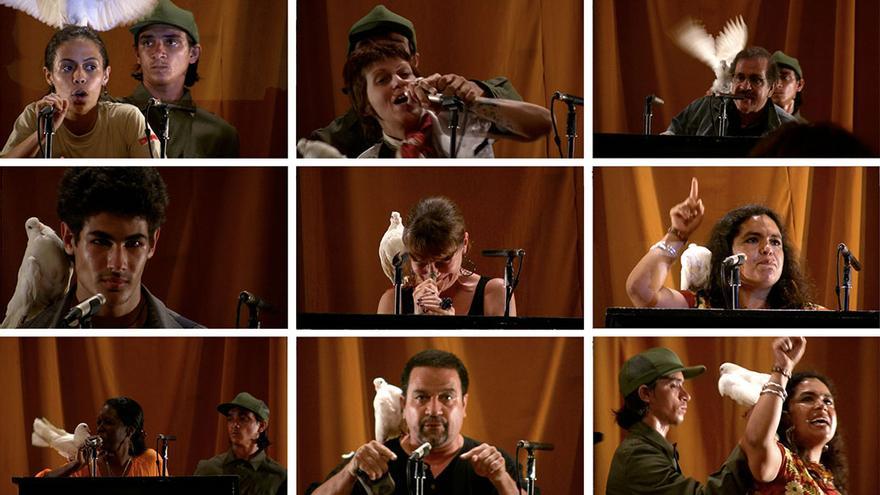
A selection of texts about artist Tania Bruguera' s censored performance: An open mike at Havana Revolution Square last 12/30/2014.


Aunque maten a golpes a mi hermana yo sé que ella está feliz. Entrevista a Deborah, hermana de Tania Bruguera. Diario de Cuba

Entrevista a Tania Bruguera: "Ellos han perdido una oportunidad única." TV Marti

La artista Tania Bruguera esta detenida en Cuba. por Nora Gamez para el Nuevo Herald

Carta de artistas e intelectuales para solicitar la liberación de Tania Bruguera. en 14 y medio

The State of Detention: Performance, Politics, and the Cuban Public. by Coco Fusco


Declaraciones de Ruben del Valle, presidente del Consejo de las Artes Plásticas en Cuba

Texto de critico y profesor Fernando Castro sobre declaraciones de Ruben del Valle


Carta del artista Lazaro Saavedra. Del blog de Enrisco

Texto del artista y critico Pablo Helguera sobre carta de Lazaro Saavedra

Sincerar la Republica. por Armando Chaguaceda en Diario de Cuba


El susurro de los artistas. Texto de Enrisco.

Cuba Turns Off Critics' Open Mike. NY Times

Fabiola Santiago: Artist’s censored effort in Havana offered Cubans a voice. by The New Herald

With no consequences in sight, Cuba continues to crack down on free speech. Washington Post.

El arte politico como delito común. por Rafael Rojas en La Razón.

Los derechos del verdugo. por Alejandro Armengol en su blog Cuadernos de Cuba

#yotambien exijo


Entrevista a Tania Bruguera por la Liga Internacional de Trabajadores

Entrevista a Tania Bruguera por Jorge Ramos, periodista de Univision

Tania Bruguera: en Cuba tenemos derecho a saber y a decir sobre nuestro destino. Radio Media Naranja. Holanda

"Devuelvo la Distinción por la Cultura Nacional y renuncio a la membresía de la UNEAC"


Tania Bruguera: ‘Que los micrófonos no sigan apagados’. por Janet Batet para el Nuevo Herald
La Escuela Internacional de Cine y Televisión expulsa al cineasta y escritor Boris González Arenas. de Diario de Cuba 

Nota de Boris Gonzalez Arena sobre su expulsion. del blog de Enrisco

Human Rights Foundation to Raúl Castro: Dismiss Case Against Tania Bruguera 

We demand a humanist and sovereign republic

Drop case against Tania Bruguera- the voice project


La izquierda no debería desentenderse de mi retención. entrevista para ABC

En Cuba hemos aprendido muy bien nuestros deberes pero no nuestros derechos- entrevista para 14ymedio

Tania Bruguera: Artivism and Repression in Cuba, by Art Critic and Curator Gerardo Mosquera
Posted by Dr. Eva Silot Bravo at 4:53 PM No comments:
Email ThisBlogThis!Share to XShare to FacebookShare to Pinterest
Labels: Cuba Transnational, Performance, Tania Bruguera, U.S.-Cuba

Saturday, December 20, 2014

Del blog de la escritora Daina Chaviano. Ni ganadores ni perdedores. Sobre las reacciones al anuncio de restablecimiento de relaciones entre los gobiernos de Cuba y los Estados Unidos.


El caso Cuba: entre la justicia y la piedad

Texto de y originalmente publicado en el blog de Daina Chaviano. 19 de Diciembre del 2014.


No me gusta escribir sobre asuntos políticos. Tampoco acostumbro a hacer declaraciones de ese tipo en entrevistas, programas de TV o artículos de opinión. He hecho alguna excepción en mi cuenta de Twitter, donde agradecí al Presidente Obama por su cambio de política hacia Cuba –una opinión personal que fue luego repetida en medios de prensa–, pero ya se sabe que 140 caracteres apenas bastan para explicarse. Por eso quiero extenderme un poco ahora.En los últimos días he leído y escuchado el arrebato internacional que ha provocado eldiscurso del Presidente Barack Obama. Las opiniones en contra han sido mucho más explícitas y extensas que las que se han expresado a favor. Supongo que dentro de estos dos bandos existen múltiples gradaciones. Las entiendo y respeto, incluso aquellas que no se acercan a las mías.


Quienes argumentan contra las medidas propuestas por el Presidente Obama han mencionado –y con toda razón– la carencia de derechos humanos en la isla, la represión contra los opositores, la falta de libertades civiles en Cuba. Como a cualquier ser humano que ama la libertad y la justicia, también me preocupa esta situación que no parece tener salida. Mientras el presidente norteamericano hablaba de aperturas, de entendimiento, de intercambios, de medidas encaminadas a mejorar el nivel de vida del cubano promedio, La Habana seguía exigiendo que eliminaran el “bloqueo” (como llaman al embargo allá), el único pretexto con que cuenta el gobierno cubano para justificar su desastrosa gestión económica. El discurso de La Habana no mencionó los cambios que ellos también tendrían que hacer para reciprocar las acciones del presidente norteamericano, pero no creo que debamos esperar por ellos.


Durante décadas el régimen cubano ha repetido las mismas excusas para tratar de explicar las penurias de su pueblo. Por experiencia personal sé que tales penurias no se deben a ningún enemigo exterior, ni embargo. “El azúcar no viene de Alaska”, dice por mí el personaje de una de mis novelas. Si el cubano no tiene a su alcance los alimentos que siempre se han dado bien en su tierra, la culpa no hay que buscarla en el extranjero.


La destrucción de la economía y de los recursos ecológicos de Cuba han sido causados por un grupúsculo que ha dirigido el país como si fuera una finca privada, siguiendo los caprichos de una sola persona que creía saberlo todo y terminó por destrozar el rostro geofísico y social de una nación. No tengo esperanzas de que esa teocracia cambie. El embargo que ya dura más de medio siglo no ha logrado conmover en lo más mínimo a los responsables de este caos. Todo lo contrario, el aislamiento les ha servido para multiplicar las justificaciones de ese fracaso.


Por otro lado, sería para reírse (si no fuera tan trágico) escuchar a los dirigentes de la isla decir “hemos ganado”, y luego ser secundados por quienes, viviendo fuera de ella, también repiten con furia “han ganado”. ¿De qué están hablando? ¿Qué país gana algo por que le devuelvan a tres sabandijas que conspiraron para matar a seres humanos? A veces pienso que algunas personas se comportan como adolescentes inflados de testosterona. Esto no es un juego. Aquí no hay ganadores ni perdedores. Y si insisten en hablar bajo esos términos, debo decirles que solo hay un gran perdedor, el único al que todos parecen olvidar: el pueblo cubano, que vive arrastrándose en la miseria año tras año, sin una ventana que le permita ver una porción del universo donde habita el resto de su especie.

Hablar de vencedores o perdedores en este contexto revela una inmadurez supina. Es muestra de un infantilismo mental y emocional que me deja atónita, y que resulta especialmente perturbador cuando lo escucho en boca de quienes se dicen enemigos acérrimos del régimen cubano. No se dan cuenta de que están repitiendo el mismo patrón marcado por su contrario.Personalmente estoy agotada de tanta fraseología acerca de triunfos y derrotas, de amenazas y enemigos en los que el pueblo cubano dejó de creer hace mucho tiempo. Les aseguro que aunque haya un millón de personas saltando al compás de ese sonsonete en medio de una plaza, mientras chillan consignas infantiloides, la mayoría de esas personas no se lo cree. Pero ahora resulta que esos mismos lemas que me atormentaron a lo largo de las tres décadas que viví en la isla, también se escuchan en el exilio, imitando el estilo de quienes están del otro lado. Al parecer no se dan cuenta de que repiten conceptos que no conducen a nada.


Por eso, si me dan a escoger entre el orgullo de quienes quieren “ganar” a toda costa y la piedad hacia mi pueblo, incluso si me dan a elegir entre algo mucho más difícil: la justicia contra los criminales que han asesinado a inocentes o la piedad hacia once millones de prisioneros que intentan sobrevivir dentro de una isla en medio del fuego cruzado, yo voto (al menos en este instante) por la piedad hacia esos once millones que aún están vivos.


Tengo que cerrar los ojos y respirar muy hondo cuando pienso en los muertos y en los que padecen, tengo que armarme de paciencia y serenidad, pero me niego a seguir apoyando el sacrificio de todo un pueblo en aras de una justicia humana que no creo que llegue. Ojalá no fuera así. Ojalá no tuviera que escoger. Pero es hora de que alguien se atreva a decirlo: la justicia no siempre llega. Los culpables no siempre son castigados. Los buenos y los nobles no siempre terminan viviendo felices para siempre. Al parecer, quienes no se han ocupado por comprender los mecanismos de la fantasía y los cuentos de hadas han terminado por creer en ellos.


No podemos esperar que pasen otros cincuenta años para comenzar a enviar grandes cantidades de recursos materiales a ese pueblo, para permitir que compañías norteamericanas mejoren las comunicaciones de los cubanos encerrados y aislados, para que alguien pueda enseñarles a abrir y desarrollar nuevos negocios, para que existan nuevas vías de acceso a las medicinas y los alimentos que tanto necesitan… Once millones de personas no pueden seguir languideciendo por culpa de la tozudez de un régimen que, en definitiva, no ha cambiado en medio siglo y no lo hará nunca, a menos que las leyes biológicas u otras circunstancias les obliguen a ello.

No se puede esperar ad infinitum por una justicia que obviamente no ocurrirá. Algunos clamarán que Dios no puede permitir eso. Para quienes son creyentes (y me cuento entre ellos) debo recordarles que Dios no es justo, sino simplemente sabio, y que cada ser humano tiene libre albedrío y construye su propio karma, incluso el post-mortem. Es muy posible que gran parte de lo que llamamos justicia divina se produzca después de la muerte, en un reino que no es de este mundo. Pero es preferible mantener este debate en la dimensión de lo terrenal. Sospecho que, en el caso de Cuba, lo más probable es que esa justicia solo quede en el colofón de la Historia que finalmente terminará condenando para toda la eternidad a quienes lo merecen.

Por esa razón no creo que debamos ser nosotros, los que vivimos fuera de la isla, quienes aboguemos por mantener a todo un pueblo arrastrando su agonía. Si podemos insuflarle un poco de oxígeno para que recupere fuerzas y logre ponerse de pie, si podemos enviar a los cubanos los recursos que les faltan para que puedan alcanzar con ellos lo que todos anhelamos, creo que habrá valido la pena tragarse un poco el orgullo y atesorar para el futuro el dolor que todos compartimos por nuestros muertos.Este cambio de política hacia Cuba no significa el fin de la lucha por la democracia en la isla. Puede ser un nuevo comienzo y una mejor oportunidad para darles recursos a quienes luchan por ella. Como dijo cierto sabio: Dios escribe recto con renglones torcidos.


Posted by Dr. Eva Silot Bravo at 3:09 PM No comments:
Email ThisBlogThis!Share to XShare to FacebookShare to Pinterest
Labels: Cuba Transnacional, Daina Chaviano, Habana, Miami, U.S.-Cuba

Friday, December 19, 2014

#yotambienexijo: Bruguera's open letter to the presidents of the U.S., Cuba and the Pope.


Tania Bruguera, Cuban performance artist and public intellectual, publishes an open letter to the presidents of Cuba, U.S. and the Pope. 
In her letter, Bruguera addresses key concerns about the prospects for the Cuban nation and the rights of Cubans in the island after the U.S.-Cuba governments rapprochement announced last December 17th. 
She also calls for a public manifestation-art performance this coming December 30th at the Revolution Square, in Havana, as an opportunity for Cubans to demand the reinstatement of their civil rights and to not be left out from the announced changes.
The letter has been launched together with an online campaign called #yotambienexijo.

Originally published by 14ymedio, online publication from independent blogger Yoani Sanchez based in Havana.

TANIA BRUGUERA, Ciudad del Vaticano | Diciembre 18, 2014


Imágenes de El Sususrro de Tatlin, La Habana
Ante todo los felicito porque siempre un momento histórico es lo que se espera de los hombres políticos y ese momento ha sido este 17 de diciembre de 2014. Ustedes han entrado en la historia al proponer que el embargo/bloqueo sea una palabra aparentemente vacía, por cambiarle –con el restablecimiento de las relaciones diplomáticas– el sentido a 53 años de política definidas por un lado (U.S.) y utilizadas por otro (Cuba), para ideologizar la vida cotidiana de los cubanos donde quiera que estuviesen. Me pregunto si es este gesto también una propuesta de muerte a la ideología. Cuba se define ya no a partir de la muerte sino finalmente a partir de la vida, pero me pregunto, ¿cuál vida y quienes tendrán derecho a esas nuevas vidas?
Ahora bien, querido Raúl:
Hoy exijo como cubana que se nos deje saber cuáles son los planes con nuestras vidas, que se establezca como parte de esta nueva etapa un proceso de transparencia política en donde tengamos todos un espacio de participación y el derecho a tener una opinión diferente que no sea castigada. Que cuando tengamos que negar muchas de las cosas que nos definieron, no venga este proceso con la misma intolerancia e indiferencia con la cual hasta ahora se han acompañado los cambios en Cuba, donde la aceptación es la única opción.
Hoy exijo como cubana que se nos deje saber cuáles son los planes con nuestras vidas
Hoy como cubana exijo que no haya privilegios ni desigualdad social. La Revolución Cubana ha repartido el privilegio como equivalente de un sentido de confiabilidad que es sinónimo de fidelidad a los que están en el Gobierno o con él. Esto no ha cambiado. Los privilegios han definido la desigualdad social en la que hemos vivido desde siempre, una desigualdad que se vestía de meritocracia revolucionaria y hoy se transforma en un emprendimiento confiable. Exijo que se defiendan los derechos de sobrevivencia material y emocional de aquellos que no podrán ser parte de esta nueva etapa.
Hoy exijo como cubana que no nos definan los mercados ni el uso que pueden hacer de nosotros los gobiernos. Pido igualdad para ese cubano que debido al bloqueo/embargo dio su vida, por ejemplo, trabajando en una fábrica para llegar orgullosamente a su casa con el título de héroe del trabajo y que hoy no tiene cabida en un mundo de inversiones extranjeras y sólo puede aspirar a un retiro que se quedó definido en tiempos socialistas y no en estos momentos de economía de mercado. ¿Cuál es el plan para no reproducir los errores de los demás países del ex campo socialista? ¿Para no convertirnos en la Cuba de 1958? ¿Para reparar el abuso emocional al que ha sido sometido el pueblo cubano con la política en los últimos años? ¿Cómo asegurar que haya justicia social y material? ¿Cómo asegurar que no seremos una colonia ni que tendremos que aceptar sin cuestionar a los nuevos proveedores materiales como ha sucedido antes con la Unión Soviética o con Venezuela?
Exijo que se pueda manifestar pacíficamente en la calle a favor o en contra de una decisión del Gobierno
Hoy como cubana exijo que se pueda manifestar pacíficamente en la calle a favor o en contra de una decisión del Gobierno o para reclamar derechos políticos y sociales, sin temer a represalias. Que se reconozcan legalmente asociaciones y partidos políticos que tengan diferentes puntos de vista del oficialismo. Que se descriminalice el activismo cívico, la sociedad civil y aquél que tenga un punto de vista diferente. Que se legalicen los partidos políticos nacidos del deseo popular. Que se establezcan unas elecciones directas donde puedan participar todos los partidos, y que las discrepancias ideológicas se resuelvan con argumentos y no con actos de repudio.
Hoy como cubana reclamo el derecho a ser seres políticos, no sólo entes de la economía o de canje simbólico para hacer historia.
Hoy como cubana quiero saber cuál es la idea de nación que estamos construyendo.
Hoy como artista te propongo Raúl poner la obra El susurro de Tatlin #6 en la Plaza de la Revolución. Abramos todos los micrófonos y que se escuchen todas las voces; que no sea sólo el resonar de las monedas lo que se nos ofrezca para llenar nuestras vidas. Que los micrófonos no sigan apagados. Aprendamos a hacer algo con nuestros sueños.
Hoy me gustaría proponerle al cubano donde quiera que esté que salga a las calles el próximo 30 de diciembre a celebrar, no el fin de un bloqueo/embargo, sino el principio de sus derechos civiles.
Asegurémonos que sea el pueblo quien se beneficie de este nuevo momento histórico. Patria es lo que nos duele.


Posted by Dr. Eva Silot Bravo at 8:14 AM No comments:
Email ThisBlogThis!Share to XShare to FacebookShare to Pinterest
Labels: Cuba Transnational, Europe, Habana, Performance, Tania Bruguera, U.S.-Cuba

What the U.S.-Cuba Breakthrough Could Mean for Music. Text by Judith Cantor on Billboard about the prospects of U.S.-Cuba announced changes for the bilateral music scene.


Originally published by Billboard

By Judy Cantor-Navas | December 17, 2014 9:43 PM EST


Descemer Bueno and Enrique Iglesias. Alan Silfen


Could Obama's 'fresh approach' strengthen both Cuba's draw as a music destination and Cuban artists' popularity in the United States?


How could restoring diplomatic relations between the United States and Cuba impact musicians in both countries?

According to information released by the White House on Wednesday (Dec. 17), after President Obama announced the historic détente, his "new approach" to Cuban policy will make it easier for American artists to travel to Cuba to perform. Cuba could even plausibly become a profitable touring destination for the first time in five decades if as yet unspecified amendments to regulations of Treasury dept regulations under the U.S. trade embargo are made, allowing U.S. artists and promoters to profit from concerts in Havana.

Muted Hurrahs For Easing of Cuban Sanctions

Questions remain as to whether American artists -- who under current U.S. regulations can give concerts legally in Cuba only under the guise of a non-profit -- will be allowed to be paid directly as commercial performers. And, if that is the case, it's unclear who the promoters for such concerts might be. 

The White House also announced that travelers to Cuba will be able to use U.S. credit cards there for the first time, and that new regulations will facilitate transactions between U.S. and Cuban bank accounts.

New regulations will also support the flow of information about music being made in the two countries by aiding the increase of Internet providers in Cuba, and allowing for the export of hardware and software to the island.

Obama’s move to drop Cuba from the list of terrorist states (if successful) will abolish an arduous and unpredictable visa process that has for years challenged Cuban artists wishing to enter the United States to perform, an activity that is now only allowed as a cultural exchange, with artists legally receiving only a per diem while on tour.

Before the announcement of renewed diplomatic relations, the artistic relationship between Cuba and the United States had in 2014 gone to a new level. Rent will debut on Christmas Eve in Havana, the first Broadway musical to be staged there in 50 years. The show is being produced by heavyweight promoters Nederlander Worldwide Entertainment, in partnership with the Cuban National Council of Performing Arts. 

This week, Enrique Iglesias' "Bailando" which features Cubans Descemer Buenoand reggaeton group Gente De Zona, set a record of 32 weeks at No. 1 on the Hot Latin Songs chart. As Gente De Zona travel regularly back and forth between Miami and Havana, the spectacular global hit marks the first time that a song featuring Cubans who have not abandoned Cuba has been on the top of the chart.

Enrique Iglesias 'Always Knew There was Something Magical' About No. 1 Hit 'Bailando'

Bueno has lived in Miami since 2000 but is also a star in Cuba, and says he struggled for years to gain ground as an artist in this country.

"For a long time, the Latin market in the U.S. hasn’t supported Cuban artists," he told Billboard previously. "But with Enrique by our side, Gente De Zona and I broke through with 'Bailando.'"

Obama’s new Cuba policy “totally changes everything,” Pierre Hachar, an attorney who represents Gente De Zona told Billboard. “When an artist puts out a record today it’s for the world to listen to. And if it becomes a hit, a Cuban artist can be heard around the world, though they may not know the success they have because they can’t leave Cuba. And if they do leave, they’re restricted. They can perform here with a P1 visa but they can’t get paid in the U.S. That’s why a lot of Cubans go out of Cuba into Europe. They can’t flourish with a career [in Cuba] through your typical platforms of distribution. They have to do it through another country.”

Gente De Zona’s solution was to apply for U.S. residency, rather than enter the States as performers. “Now that their residency is granted, they can move forward and get paid,” Hacher explains.

Cuban music had enjoyed a boom in popularity in the United States after Washington exempted Cuban recordings and other "informational material" from the trade embargo in 1988, and later allowed Cuban artists to perform stateside, although under the condition that they receive no more than per diem payments. By 2000, hundreds of musicians from the island had performed in the States, most prominently Buena Vista Social Club, whose 1997 Ry Cooder-produced album on Nonesuch went on to sell more than 1.8 million U.S. copies, according to Nielsen SoundScan.

After 9/11, the Bush administration banned the Cuban artists. The U.S. Department of State did not authorize any such visits between 2003 and 2009. That year, Obama loosened travel restrictions for Cuban artists and other Cuban nationals. In 2013, Cuba relaxed travel restrictions for its citizens.

“I think with Cuba, for the first time what was impossible is starting to happen,” Bueno says. “I’ve been able to perform in Cuba in spite of the fact that I’ve been living in Miami since the year 2000. I’ve done it in a respectful way, I’ve just asked for what’s my right as a Cuban -- to go to my country and play for the Cuban people.”

Beyonce & Jay Z's Cuba Trip Was Legal, U.S. Inspector Finds

While it seems that now a perfect storm of artistic and political events could strengthen both Cuba’s draw as a music destination and Cuban artists’ popularity in the United States, Obama’s “new course on Cuba” will not totally take down the embargo -- that power is in the House and Senate. As well, these first stabs at diplomacy cannot instantly smooth over complicated relationships between Cubans and Cuban Americans, nor will they erase the impact of Cuba’s decades of isolation and distance from the U.S. and global music economies. 

“This is still a work-in-progress,” cautions Bill Martinez, a Bay area attorney who has handled the majority of visa paperwork for Cuban artists who’ve performed in the United States and for American artists who’ve traveled to Cuba over the past two decades. “We’ll soon find out how this plays out.”

Martinez revealed he is working on events for 2015 that could be test cases for the new regulations. 

"A happy day has arrived," Silvio Rodriguez, the singer-songwriter who's often called "the voice of the revolution," wrote on his blog from Havana after Raul Castro announced the talks with Obama and the release of Cuban political prisoners on Wednesday. "I vote that this attitude of dialogue continues on both sides, so that we can live in peace like the neighbors we are."

But no such elated message came from another famous Cuban artist, Gloria Estefan, who said through a spokesperson that she would have no comment on the matter at this time. Estefan made no mention of the historic news about her native land Wednesday on her Twitter account, either, only commenting that she was taping a guest spot on Glee.

It can be supposed that Estefan, a supporter of the U.S. embargo against Cuba, was not thrilled to see images of the U.S. president sitting down with one of the Castro brothers.

Pitbull, who in 2006 released a song contemplating the death of Fidel Castro, and once reportedly hinted lightly that he would run for president of Cuba; and other Miami-based artists who through the years have been outspoken critics of the Cuban regime were also silent on social media. 

A Florida International University poll on Wednesday found that 68 percent of Cuban Americans supported restoring diplomatic relations with Cuba.

"This something so many people have been dreaming about," says Martinez. "I even thought it was a dream when I got the call. It's tremendous."

--Additional reporting by Leila Cobo.

Posted by Dr. Eva Silot Bravo at 7:40 AM No comments:
Email ThisBlogThis!Share to XShare to FacebookShare to Pinterest
Labels: Billboard, Cuba Transnational, Judith Cantor, Music, U.S.-Cuba

Thursday, November 13, 2014

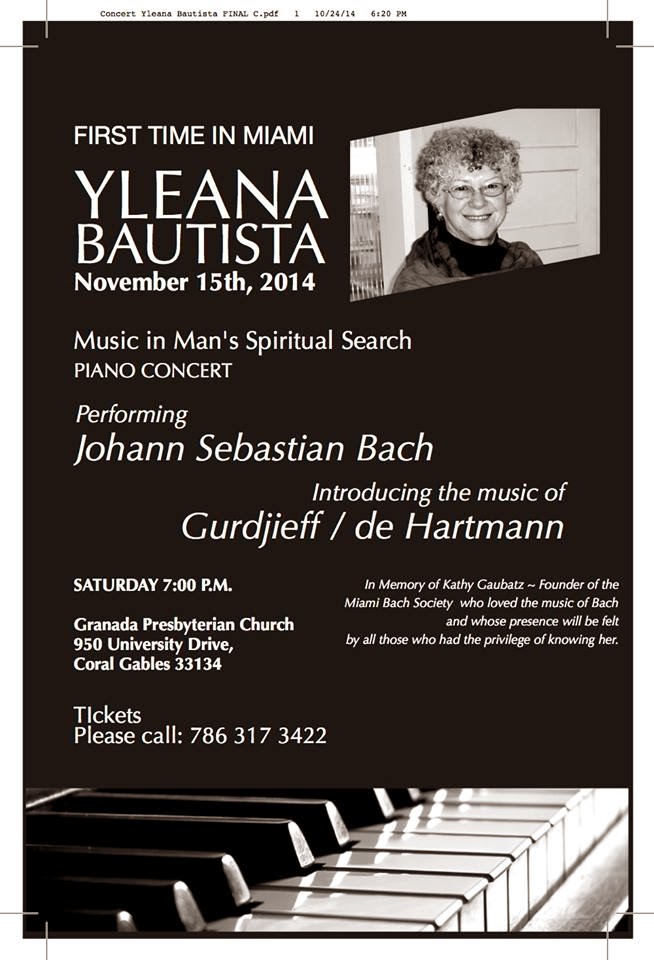
Cuban Master Pianist Yleana Bautista upcoming concert for her first time in Miami. November 15th, 7:00 pm. Coral Gables Presbyterian Church


For her first time in Miami Yleana Bautista, Piano Master of several generation of musicians from an array of Latin-American countries, will offer a very special concert in Coral Gables, Granada Presbyterian Church, this coming November 15th, at 7:00 pm.

This event is not only a piano concert. It's also the possibility to learn first hand about an important part of Bautista professional research and personal quest, hence the concert title: "Music in Man's Spiritual Search". The event will also be in memory of Miami Bach Society founder Kathy Baubatz.

Details in flyer


Posted by Dr. Eva Silot Bravo at 3:50 PM No comments:
Email ThisBlogThis!Share to XShare to FacebookShare to Pinterest
Labels: Bach, Cuba Transnacional, Events, Music, Pianists, Yleana Bautista

Thursday, November 6, 2014

Miami based Curator Elizabeth Cerejido on Cuban artist Glexis Novoa latest exhibition: Painting on Canvas


Exhibition Close-Up: Glexis Novoa: Painting on Canvas

Originally published by Cuban Art News . November 06, 2014
Independent curator Elizabeth Cerejido reflects on the change of direction in the artist’s current show
View of the exhibition Glexis Novoa: Painting on Canvas at Juan Ruiz Gallery
Courtesy Juan Ruiz Gallery
In Painting on Canvas, his current show in Miami, Glexis Novoa reconsiders a visual vocabulary he first developed in the 1980s and early 1990s. In her exhibition essay, independent curator Elizabeth Cerejido explores Novoa’s current work in light of his earlier art and his recent return to Havana.
Our thanks to Elizabeth Cerejido and Juan Ruiz Gallery for permission to translate and reproduce this essay, and to Virginia Soto for assistance with the translation.
Painting on Canvas, Glexis Novoa´s first solo exhibition at Juan Ruiz Gallery in Miami, is specifically noteworthy for the following revisionist aspects: 1) the artist's re-examination of an early period of his own work that was interrupted by exile in the mid-1990s; and 2) the place where the works were executed, which is Havana, where Novoa recently set up a studio after a twenty-year hiatus.  His return to the formal qualities of the Etapa práctica (the Practical Stage) and to the specificity of the Cuban context reveals poignant aspects of contemporary Cuban art today and the artist’s place in it.

Glexis Novoa has been a pioneering figure in contemporary Cuban art since the late 1980s. He belongs to the generation of artists who, along with the Volumen Uno group that preceded them, organized groundbreaking exhibitions challenging the status quo of the Cuban visual arts scene and the government's cultural politics. At times referred to as “the children of the Revolution” for being the first generation of artists to grow up under Fidel Castro´s socialist government, Novoa and his contemporaries ushered in contemporary art practices that drew on international trends such as Conceptual Art, Pop, and kitsch aesthetics.
While committed to art’s potential as an agent for social change, the artistic practices of the Volumen Unogroup, though unquestionably groundbreaking, remained limited to neat formal and conceptual propositions. Novoa instead pushed the envelope further by employing performative and interventionist strategies that, with cunning satire, went further in contesting the strictures imposed by Communist ideologies on the role of art in society. In his personal work, he created an artist persona and planned the development of two series: the Etapa romántica (Romantic Stage) of the mid-1980s) and the Etapa práctica (Practical Stage) of the late 1980s to mid-1990s. These works follow the artist’s transition from one who intentionally created bad and ugly works, lacking any formal decorum, to a period in which he purposefully displays his technical dexterity and commercial savvy. In the former series, Novoa often inscribed onto works on paper and canvas nonsensical phrases that appeared to be pronounced by an adolescent rather than by an artist who had received rigorous training in the visual arts at the ENA (National School of Arts).

Untitled (from the Etapa práctica), 1989, is an ambitious, large-scale installation that best culminates the work of this period. Initially it was exhibited at the 3rd Havana Biennial and is now in the collection of the Pérez Art Museum Miami (PAMM). It comprises several canvases, and works on paper and other media, including abstract forms and structures evoking the Soviet-style aesthetics of political propaganda.  Masterfully made in a visual language that combines Expressionism, Constructivism and Social Realism, the altar-like arrangement of these various elements brings to the work's visual grandiosity an officialdom sanctioned by its visual state. Yet upon closer inspection, the signs and abstract forms making up the work are empty of any meaning, turning the impulse and armature of socialism into mere pattern.
Glexis Novoa, 1989 painting from the series Etapa práctica
Courtesy The Farber Collection
By co-opting a formal language at once familiar and attractive to local and international audiences, Novoa guaranteed his place in the then-burgeoning art market for contemporary Cuban art of the late 1980s, while unequivocally making a subversive commentary on a Communist ideology that was rendered vacuous and bankrupt by the end of the Cold War. Thus, from the Etapa práctica were borne the fundamental elements that have characterized Novoa´s work from that point throughout his career: the use of apocryphal symbols to comment on structures of power or what the artist himself refers to as la arquitectura del poder.
Nearly 30 years later, Painting on Canvas draws heavily on the combination of stylistic languages from this earlier period. Here, Novoa has abandoned the work in graphite of meticulously rendered imagined urbanscapes on marble and drywall, often as site-specific installations, for which he became known after permanently settling in Miami in 1994. However, the artist’s penchant for the graphic element is still present, evident in the Brutalist-style solid blocks and typeface that outline forms, letters, and symbols in heavy blacks, contributing to the works’ dramatic dimension. In this recent series, symbols that address the specificity of post-Soviet Cuba enter into dialogue with other elements equally painted in bold abstraction, which represent the influence of more universal and metaphysical concerns. Each work creates a subtle yet poignant commentary, literally layered with paint and figuratively with meaning, about the contradictory sociocultural, political, and economic realities of both the new Cuban context he encountered, and of his own personal and cultural identities.
Glexis Novoa, CUC, 2014
Courtesy Juan Ruiz Gallery
Consider the painting in which three letters spell out CUC: the acronym for Cuban Convertible Currency.  Unlike the apocryphal symbols from the 1990s, the letters CUC stand for something tangible and real: one of two official currencies that circulate on the island. Yet the manner in which they are painted, bluntly and strikingly occupying the center of the picture plane, seem an ominous reminder of the complicated sociopolitical and economic implications they embody. The CUC is the more valuable of the two currencies within the island, although it has no value on the international market and not all Cubans have access to it. [The Cuban peso, the other currency, is the one in which Cubans get paid.  However, it is valued at roughly 1/20 of the CUC. And while the CUC has no international value, it is used to control the flow of foreign currency within the island.] As a result, an increasing disparity has ensued, creating class divisions within Cuban society, where egalitarian socialist values give way to the rise of arbitrary and contradictory economic measures. Given their unstable meaning, Novoa transforms the letters CUC into abstractions, equally fictitious and decontextualized, characteristic of his overall work.
Glexis Novoa, Screw, 2014
Courtesy Juan Ruiz Gallery
Novoa revisits the relationship between figuration and abstraction or the reduction of political content to mere form in another recent painting, titled Screw. The work has its formal and conceptual antecedents in a large-format diptych that Novoa executed in 1991 as part of the series, Logros de la economía [Accomplishments of the Economy], also belonging to the Etapa práctica. Logros aimed to reduce the rhetoric of politics to mere abstraction. In that work, Novoa was referring to Fidel Castro's numerous speeches on the state of the national economy in which he would cite a litany of exaggerated figures meant to impress Cubans with their country's progress. The incomprehension of Fidel's repeated and exaggerated pronouncements, akin to “one million screws produced in such and such time," is visually represented as two minimalist, highly abstract versions of a screw. In the recent variant of that work, Novoa further deconstructs the idea of building a new society to a single image of a screw pointed downward, beautifully painted in an incandescent tone of aqua against the background of heavily applied dark purples and blues. The work's heightened formal qualities reveal the loss of meaning and disconnect between content and rhetoric.
Glexis Novoa, Dharma Wheel, 2014
Courtesy Juan Ruiz Gallery
Representing more personal and universal themes are works such as Dharma Wheel or Sutta, which reflect the artist's recent interest in Buddhism. The Dharma Wheel is Buddhism's most recognizable symbol as a religious and spiritual practice, but on a broader metaphysical level it is also associated with the cyclical nature of life and death. Novoa´s Dharma Wheel is an abstracted version of the more traditional representations of the symbol, reinforcing the artist's practice of deconstructing and re-interpreting content and meaning into evocative forms. Another reading of the Wheel, in the context of Novoa's new work, tempts one to read it as a metaphor for the artist's gestures of return, "coming full circle" to both place and content, with vastly renewed perspectives.
Glexis Novoa, Pesos Convertibles, 2014
Courtesy Juan Ruiz Gallery
Glexis Novoa, Deva I, 2014
Courtesy Juan Ruiz Gallery


The visual semiotic play that exists between Pesos Convertibles and Deva I provides a cunning example of the interchangeability of sign and signifier present in some of these works. Pesos takes the form of an eagle-like insignia as its principal figure, flanked on either side by the letters "P" and "C."  In Deva I—the Sanskrit name for deity—floating, amorphous, yet ambiguously recognizable shapes make up the work's overall composition. The horn-like designs of the central image echo the winged-like contours of Pesos. The visual equalizing of deity and currency attests to Novoa's interest of deconstructing mechanisms of power and hierarchy beyond their discursive potentiality. 
Installation view with Pesos Convertibles in foreground at right
Courtesy Juan Ruiz Gallery
The commingling of these signs also function to situate Novoa in his work as a transitional figure who navigates between two opposing yet increasingly intersecting contexts: Miami and Havana. In a broader sense, his acts of return also reveal the complexities that are operative in the production and consumption of contemporary Cuban art. As in Etapa práctica, Novoa plays into the power structures of the art market—this time, with the market's perception that the legitimacy of Cuban art is contingent upon where it is produced (Cuba), eschewing diasporic productions, and increasing transnational relations among Cubans in and outside the island that have been destabilizing previously rigid territorial and ideological demarcations. Novoa both reinforces and challenges those market biases by producing work in Havana intended to circulate outside the specific charge of its conceived site, and for the consumption of audiences in Miami. That Cuban artists in Cuba have been doing exactly that for decades not only compounds the ironies and contradictions inherent in such biases but also helps understand Novoa´s gestures of return as performative and strategic. Returning to these various aspects, Novoa's new series and its intended functions ultimately reveal the inherent tensions and inevitable interconnectedness between the local and global in today’s cultural production, as well as, the de-territorialization of nation and diaspora.
Glexis Novoa: Painting on Canvas runs through November 22 at Juan Ruiz Gallery in Miami.
— Elizabeth Cerejido
Elizabeth Cerejido is a Miami-based independent curator whose research interests include modern and contemporary Latin American art and photography, with an emphasis in Cuban and Cuban-American art and cultural politics. Cerejido is former assistant curator of Latin American and Latino Art at the Museum of Fine Arts, Houston and was curator at the Patricia & Phillip Frost Art Museum at Florida International University from 2002 to 2007.
Posted by Dr. Eva Silot Bravo at 5:19 PM No comments:
Email ThisBlogThis!Share to XShare to FacebookShare to Pinterest
Labels: Artes visuales, Cuba Transnational, Elizabeth Cerejido, Glexis Novoa, Habana, Miami
Newer Posts Older Posts Home
Subscribe to: Posts (Atom)

Blogroll

  • 14 y Medio
  • Alexander Arrechea
  • Belkis Ayón
  • Brain Pickings
  • Café Fuerte
  • CAsT0r JABAo
  • Consuelo Castaneda
  • Cuba Contemporánea
  • Cuba Encuentro
  • Cuba Literaria
  • Cuba Material
  • Cuba: la memoria inconsolable
  • Cuban Art News
  • Cubanet
  • cubatiene
  • Desliz / Slip
  • Diario de Cuba
  • El Caimán Barbudo
  • El Estornudo
  • El Exégeta
  • El Sexto
  • El Yuma
  • Enrisco
  • Erik Ravelo
  • Ernesto Fundora
  • Estado de SATS
  • Fabrica de Arte Cubano
  • Geandy Pavon
  • Generación Y
  • Gerardo Fernández Fe | blog del escritor Gerardo Fernández Fe
  • h e c h i z a m i e n t o. . .
  • inCUBAdora
  • Isliada
  • IvanART
  • Iván de la Nuez
  • Juan Sin Nada
  • judithsanchezruiz.com
  • La Jiribilla
  • Letras Libres
  • Libros del crepúsculo
  • Liliam Dominguez
  • Los que sonamos por la oreja
  • Lunes de Post-Revolución
  • Maya Angelou
  • Miami Observatory
  • Nereida Garcia Ferraz
  • NY Review of Books
  • OMNI-Festival Poesía Sin Fin
  • OnCuba » Languages » English
  • Rodin Sotolongo Zapata
  • Rodolfo Peraza
  • Suena cubano
  • t u m i a m i b l o g
  • Tania Bruguera
  • TED
  • Timba.com
  • Translating Cuba
  • Vistar Magazine
  • Voces Cubanas
  • www.lajiribilla.cu

Labels

  • Academia (43)
  • Afrocuban jazz (20)
  • Artes visuales (17)
  • Articulos (11)
  • Cuba Transnacional (43)
  • Cuba Transnational (78)
  • Cuban Fusion (30)
  • Entrevistas (18)
  • Events (26)
  • Habana (30)
  • Literatura (12)
  • Madrid (10)
  • Miami (61)
  • Music (108)
  • New York (14)
  • U.S.-Cuba (10)

Websites

  • Adonis Gonzalez
  • Adrian Morales
  • Alain Perez
  • Aldo López-Gavilán Junco
  • Alex Cuba
  • Alfredo Chacon
  • Alfredo Rodriguez
  • Angel Arce
  • Athanai Castro
  • Boris Larramendi
  • Carlitos del Puerto
  • Carlos Averhoff Jr.
  • Carlos Puig-Hatem
  • CHARLES FLORES
  • Cuarteto Assai
  • Dafnis Prieto
  • Descemer Bueno
  • Desmemoriados... - Historias de la Música Cubana
  • Elio Villafranca
  • Elmer Ferrer
  • Felipe Lamoglia
  • FREE HOLE NEGRO
  • Glenda del E
  • Gonzalo Rubalcaba
  • Got Clave?
  • Habana Abierta
  • Harold López-Nussa
  • Havana NRG!
  • Havana-Cultura
  • Hilario Bell
  • Horacio "El Negro" Hernandez
  • INOR SOTOLONGO
  • Ivan Melon Lewis | See you on stage.
  • Jazz Music - The music of jazz today
  • Jimmy Branly
  • Jose Armando Gola
  • Jose Ramon Mestre
  • Julio Barreto
  • Julio Fowler
  • La ruta de las almas (The Road of the Souls)
  • Leslie Cartaya
  • Mr. Haka
  • MUSICABANA FESTIVAL
  • NIUVER
  • Omar Sosa
  • Omni-ZonaFranca
  • Oriente Lopez
  • ORISHAS
  • Osmany Paredes
  • Palabras
  • PALO!
  • Pedrito Martinez
  • Premios Lucas
  • Ramon Valle
  • RAUL PAZ
  • Raul Pineda
  • Roberto Fonseca
  • Sitio web de Vanito Brown
  • Spam Allstars
  • suenacubano.com :: El portal de la música cubana
  • TELMARY
  • The Harlem Quartet
  • Tiempo Libre
  • Timbalive
  • Web oficial de Pepe Rivero - Compositor y arreglista
  • Worldwide Cuban Music | El blog de la música cubana alrededor del mundo
  • Xiomara Laugart
  • YADAM
  • Yosvany Terry
  • YOTUEL ROMERO
  • YUSA

Search This Blog

About Me

My photo
Dr. Eva Silot Bravo
Afro-Cuban female author & creative, educator, interdisciplinary scholar & former diplomat and international negotiator in the United Nations, New York. Ethnic Studies Faculty at Oakland School for the Art in Oakland, CA, since 2023. A PhD. in Cultural Studies, Spanish and Literatures from the University of Miami since 2016, an M.A. in International Studies from Florida International University and a B.A. in International Relations from Havana, Cuba. She has published 20+ texts, including academic articles, art reviews and interviews on Cuban music, literature, film, and other cultural topics. Her sustained commitment for documenting voices of migrant, Afro-descendent and female creatives led her to create the blog Cubanidadinbetween, and two bilingual podcasts “Miami Alternativo” and “Word Culture.” She produced concerts and collaborated with local cultural institutions in Miami, promoting Cuban music. Looking for consulting opportunities in public speaking, higher education, writing, content creation and event production.
View my complete profile

Archive

  • December 2024 (2)
  • August 2024 (4)
  • June 2024 (2)
  • May 2024 (1)
  • February 2024 (1)
  • September 2023 (1)
  • July 2023 (1)
  • February 2023 (1)
  • November 2022 (2)
  • June 2022 (1)
  • March 2021 (1)
  • August 2020 (2)
  • May 2020 (1)
  • April 2020 (1)
  • November 2019 (1)
  • August 2019 (1)
  • April 2019 (1)
  • January 2019 (1)
  • July 2018 (4)
  • May 2018 (2)
  • April 2018 (1)
  • March 2018 (3)
  • February 2018 (1)
  • January 2018 (4)
  • December 2017 (1)
  • November 2017 (3)
  • October 2017 (1)
  • September 2017 (2)
  • August 2017 (4)
  • May 2017 (3)
  • April 2017 (3)
  • March 2017 (3)
  • October 2016 (1)
  • September 2016 (2)
  • June 2016 (1)
  • May 2016 (1)
  • April 2016 (5)
  • March 2016 (5)
  • February 2016 (1)
  • January 2016 (2)
  • December 2015 (3)
  • November 2015 (8)
  • October 2015 (6)
  • September 2015 (6)
  • August 2015 (6)
  • July 2015 (2)
  • June 2015 (4)
  • May 2015 (1)
  • April 2015 (1)
  • March 2015 (1)
  • February 2015 (1)
  • January 2015 (2)
  • December 2014 (3)
  • November 2014 (2)
  • October 2014 (7)
  • September 2014 (12)
  • August 2014 (4)
  • July 2014 (4)
  • June 2014 (5)
  • May 2014 (4)
  • April 2014 (7)
  • March 2014 (3)
  • February 2014 (5)
  • October 2013 (2)
  • September 2013 (4)
  • August 2013 (1)
  • March 2013 (3)
  • September 2012 (1)
  • August 2012 (1)
  • July 2012 (1)
  • June 2012 (1)
  • April 2012 (1)
  • March 2012 (2)
  • February 2012 (5)
  • December 2011 (1)
  • November 2011 (7)
Awesome Inc. theme. Powered by Blogger.