Saturday, August 8, 2015

17th Edition of the Afro Roots World Music Festival and Conference in Miami


Festival Press Release:
Annual Afro Roots World Music Festival Returns for a 17th Season
2015 edition expands to 10 acts and over three days and three Miami and Miami Beach venues, panels and workshops
July 15, 2015 – Miami, FL – The Miami-basednon-profit organization Community Arts and Culture, dedicated to presenting the arts as a tool for education, is planning their biggest festival event ever. Taking place August 6 – 8, 2015, the 17th annual Afro Roots World Music Festivalwill launch with a kick-off celebration on Thursday, August 06, at Blackbird Ordinary (729 SW 1st Ave, Miami, FL 33130), continue with a World Music Conference and Global Locals Showcaseon Friday, August 07, at the Little Haiti Cultural Center (212-260 NE 59th Terr, Miami, Florida 33137), and wrap things up with a main event headliners  concert on Saturday, August 8th, at the North Beach Bandshell (7275 Collins Ave, Miami Beach, FL 33141).
Celebrating the evolution of African culture by featuring some of the best performers from all over the Caribbean, the Americas and Africa, the festival’s opening event will feature music by Cortadito (Cuba / Miami) and Patacon Conspiracy (Colombia) along with a global bazaar. Day two at the LHCC includes showcase performances by Conjunto Progreso (Cuba / Miami), PALO! (Cuba / Miami), Morikeba Kouyate (Senegal), the Nag Champayons (Little Haiti) and Los Herederos (Cuba / Miami), plus DJ Moses spinning  global selections. Day three on Miami Beach will conclude with headliners Hassan Hakmoun (Morocco), Locos Por Juana (Colombia) and Bateria Unidos deMiami (Brazil), along with DJ Le Spam.
Day two’s World Music Conference and Global Locals Showcase is the festival’s most recent undertaking. The conference will feature three highly informative panel discussions focusing on the business of world music, such as how to build an effective management, publishing and publicity team, what artists need to know about booking agents and touring, etc. Speakers and Panelists will include Dmitri Vietze (CEO / Founder of Rock Paper Scissors, Inc.), Isabel Soffer (Co-Founder/ Co-Director of Globalfest), Deirdre Valente (Lisa Booth Management), Cary Sullivan (producer, Airtel Music Express / booking agent, Afro Funke), Gustavo Fernandez (CEO, Delanuca Music Group, President, BVE 45), and Janice Bond (Cultural Curator | Arts Advocate).
Workshops will focus on North and West African traditions and Afro-Cuban folklore. This year’s main festival headliner Hassan Hakmoun will present a lecture/demo on the traditional sounds and culture of the Gnawa people of Marrakesh. He will be demonstrating his main instrument the sintir, a three-stringed lute with a body made of camel skin stretched over nutwood. Master percussionists Roman Diaz and Mauricio Herrera and multi-instrumentalist Onel Mulet will demonstrate the application of traditional Afro-Cuban based folkloric music in the context of modern or contemporary music. Senegalese percussionist Aly Mbaye and Morikeba Kouyate on the korawill show attendees the rhythms of the sabar drum and djembe, as related to the Mandingo musical traditions of Senegal, West Africa. Delou Africa Inc., a locally based non-profit organization that presents the annual African Diaspora Dance & Drum Festival of Florida, will be hosting a West African dance workshop with a live percussion ensemble.
A special after-party will take place Saturday, August 8 at Naomi's Garden Vibes Restaurant (650 NW 71st St, Miami, FL 33150), beginning at 10 p.m. featuring DJ Lance –O and the Kulcha Shok crew. There will be a $5 cover charge and the event is open to those 21 and over.
Support for the Afro Roots World Music Festival is made possible by the Knight FoundationFundingArts Network, the Miami-Dade Department of Cultural Affairs, the Little Haiti Cultural ComplexBlackbird Ordinary, the New Yorker Hotel, Kulcha Shok Musik, and Blackwell Rum.
Day one is free and open to those 21 and over. $20 two-day passes for days two and three are available online at afrorootsfest17.bpt.me or admission is $15 at the door. A $10 discounted door rate is available for students and seniors with ID; kids 12 and under are free. 


Saturday, August 1, 2015

Music and the Brain: A Conversation With Dafnis Prieto and Larry Appelbaum

Coco Fusco—THE REVOLUTION IS DEAD—BUT LONG LIVES THE STATE!


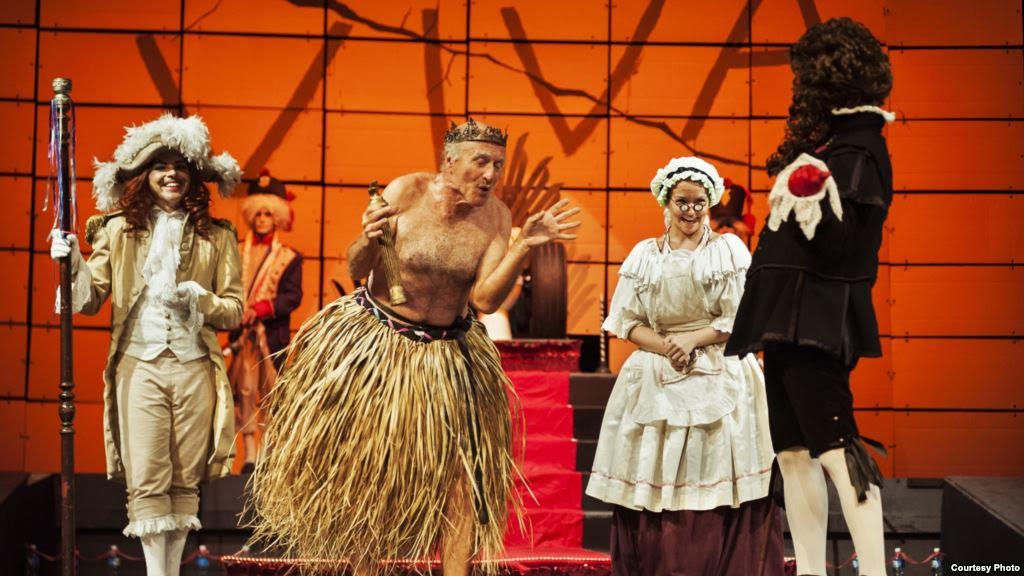
Juan Carlos Cremata’s production of The King Exits, a play by Ionesco, was recently censored in Cuba.

Published on e-flux
On the eve of the restoration of diplomatic relations between Cuba and the United States after a half-century standoff, I paid a visit to the Solidarność Museum in Gdansk. The museum’s permanent exhibition is an encyclopedic display of documents, videos,artifacts, and photographs detailing the rise of the independent trade union in the adjacent shipyard, the repressive response of the Soviet and Polish authorities, and the spread of popular resistance that, we are to understand, led to the end ofCommunism in the East. Though Solidarność’s retreat from politics in the 1990s and Poland’s transformation into a neoliberal economy with an ever-widening gap between low wages and high prices are absent from the story told by the museum, I found it hard to feel cynical about the heroic tale of righteous workers who spearheaded a peaceful revolt against oppressive state authority.Who among the world’s downtrodden wouldn’t want what these workers asked for?

Solidarność’s original twenty-one demands read like a blueprint for a utopian society, a kind of socialism without fangs in which workers could organize, strike, and also get raises, where free speech was enshrined, affordable food and housing were guaranteed together with paid maternity leave, and the bosses’capacity to skew managerial policies in their favor was checked.

The workers’ demands not only inspired compatriot intellectuals to assist them but also opened the door to a radical art fringe—the Orange Alternative—that staged irreverent street performances in defiance of authoritarian rule.

While many Cuban intellectuals also hoped for a political transformation in the 1980s, the Caribbean island’s leadership managed to ward off the end of socialism by stepping up repression and blaming the US embargo for its financial woes, rather than its own inefficiencies and political miscalculations.The Cuban government responded to the withdrawal of Soviet subsidies by authorizing a few small businesses and decriminalizing hard-currency possession, which led to the return of farmers’ markets, the emergence of home-based restaurants and barber shops, and a steady increase in remittances from exiles. Nonetheless, in the early 1990s, as food and power shortages dominated daily life, the value of wages plummeted and a wave of censorship hit the cultural sector. Cuban professionalsand artists left in droves. At the height of Cuba’s post-Soviet crisis, mass emigration on makeshift rafts for those who had no invitation to travel abroad was cynically encouraged by the state. It was not until Hugo Chavez took power in Venezuela and began supplying cheap crude oil to the Castro government that the island’s economy stabilized.

Nowadays, Cuban dissidents supported by the Lech Walesa Institute Foundation travel to Poland and visit the Solidarność exhibit, consult with former leaders of Eastern European opposition movements, and enjoy high-speed internet access free of charge at the embassies of former socialist block countries.They look to Eastern Europe for models and methods. They swaptales about growing up with Russian cartoons and black-marketvendors, and about contending with secret police andimpenetrable bureaucracy. But the comparisons stop there.

Cuban socialism was not imposed by a foreign power, nor can its government be characterized as a Soviet puppet. As historian Lillian Guerra has shown in her masterful study Visions of Power inCuba: Revolution, Redemption and Resistance, 1959–1971, the majority of Cuban citizens willingly relinquished their civil rights in the early stages of the revolution, believing that this was necessary to safeguard the country from foreign-backed threats to national security. The grand narrative about an underdog standing up to a foreign oppressor belongs to the Cuban government, with its anti-imperialist rhetoric and its invectives against the US embargo.While the middle and upper classes that fled to Miami are famous for their anti-Communism, the nationalist bent of the Cuban revolution and its dependence on a single charismatic leader who set policy via televised decree for fifteen years before approving a constitution made the tropical version of socialism quite different from any other.

Cuban dissidents are not trade unionists—they are intellectuals and professionals, many of whom fell out with the regime, and in some cases they are family members of political prisoners. The main audience for their muckraking remains outside the country and their attempts to intervene in Cuban public life are met with harsh responses from police and vituperative media campaigns instate media that dismiss them as mercenaries. No opposition group boasts membership as large as Solidarność once had—only one broad-based effort to bring about constitutional reform took root in Cuba in the 1990s and its leaders were soon imprisoned; its founder, Oswaldo Payá, died in a mysterious car accident in 2012.The common adage among Cuba’s critics is that the only way citizens can truly express their political will is by leaving the country.

Revolutionary rhetoric aside, Cuba’s economy is closer to state capitalism than centralized state socialism. The country’s public sector has been shrinking since the Soviet Union withdrew subsidies in the 1990s, while joint enterprise with SouthAmerican, Canadian, and European companies has grown. Privatization in the economic sector, however, has not been coupled with political liberalization, a point that is often made by critics of the Obama Administration’s new policy. There are many reasons why Washington may actually prefer to keep the current regime in power in Cuba. Unlike Eastern Europe, which enjoyed broad support from cold warriors in the US and Western Europe for its popular opposition to Soviet-style governance, Cuba operates in a post–Arab Spring geopolitical arena. Western powers are wary of popular uprisings and destabilized authoritarian states, which may explain why the Obama Administration appears so keen to negotiate with the Cuban regime instead of seeking to topple it. Indeed, despite the widespread belief that Cuba’s transition is imminent, the main player in the process is the current leadership, not the opposition. What is changing then is US-Cuba policy, not the Cuban government. Human rights are a bargaining chip, not a game changer in the discussion. Cuban dissidents may have racked up human-rights awards in Europe and they may enjoy photo ops with American politicians, but they do not command a mass following inside the country. Nor are they being groomed for future leadership. The Cuban government knows that it has the upper hand. Many Cuban dissidents have expressed anger and a sense of betrayal because realpolitik is not what they expected from Washington.

Since the December 17, 2014 announcement of a rapprochement between the US and Cuba, the political discussion in English has centered on who is perceived to have the upper hand in the negotiations. Unfortunately, the lack of nuance in most English-language reportage has encouraged many to confuse the announcement of renewed diplomatic ties with the termination of the US trade embargo, which it is not. Promised changes for Cubans, such as the expansion of internet services and the termination of a dual currency system in which most salaries are paid in worthless non-convertible pesos, have yet to materialize. But changes in the ways that Cubans see and speak about themselves have been taking place over the past decade.

Thanks to the development of citizen journalism on the island, Spanish-language media coverage offers more detailed and more critical accounts of the Cuban political apparatus and the country’s social ills, it's crumbling infrastructure, and its invasive policing practices. An expanding blogosphere led by a young generation of tech-savvy writers and activists has provided readers outside Cuba unprecedented access to social commentary from unauthorized sources and has facilitated public debate between island-based commentators and exiled intellectuals.While dissident musicians, writers, and indie filmmakers lash out publicly against the Cuban government, the artists who benefit from the support of the state’s cultural apparatus for the most part have stayed out of political debates. One notable exception to this pattern is the controversial but highly regarded film and theater director Juan Carlos Cremata, whose recent dramatic production of Eugène Ionesco’s Exit the King was shut down by authorities after one weekend on the boards. Apparently, a play about a four-hundred-year-old king whose kingdom is crumbling was too dangerously close to Cuban reality for their liking.

Cremata responded to the censorship by immediately publishing a scathing critique of state power in relation to the arts sector on numerous opposition blogs, and even granted an interview to Radio Martí in Miami. Visual artists are generally not so bold.They were among the first cultural producers in Cuba to be able to earn in hard currency and to negotiate independently with foreign entities; many enjoy a lifestyle that is envied by most Cubans. The beneficiaries of such privileges take a pragmatic approach to engaging both with the Cuban state and the global art market. Indeed, most of Cuba’s artists share their government’s desire for greater access to the global marketplace and its reticence to discuss human rights. Those who speak out about restrictions on speech, movement, and political conduct have either always been marginalized, or have fallen out of favor and have less to lose.Culture in today’s Cuba is a profitable business and complaining about civil rights is tantamount to being a wet blanket at a wild party. American collectors, who are flocking to the island in search of bargains, are happy to find a cadre of smart young artists poised and ready for business and seemingly uninterested inpolitics.

The Obama Administration has just removed Cuba from its state-sponsored terrorism list, giving the island greater access toforeign trade. Washington has also taken other measures that increase capital flow to the island, easing the economic pressure that failed to bring about systemic collapse or regime change. Up to now the Cuban government has only agreed to the original prisoner swap and the reopening of embassies. It maintains its longstanding demands for the return of the Guantánamo base, the lifting of the embargo, and the termination of US-based pro-democracy programs. While the American media sings Cuba’s praises as a tropical paradise full of sunny beaches, colonial architecture, vintage cars, and skilled-but-low-paid workers, Raúl Castro insists regularly on Cuban television that the socialist character of the Cuban state is not up for negotiation. Cuban dissident groups prepare their proposals for new civil rights legislation and demand a referendum, but Washington does not appear to be pressuring Cuba on these issues. The rate of detentions of dissidents and activists on the island has not gone down as negotiations progress. Old-guard exiled conservatives grumble about the rapprochement, sensing their loss of decision-making power over US-Cuba policy, but a younger generation of Ivy League–educated Cuban-American neoliberals has aligned itself with the Obama Administration, trying to be first in line to invest in the Cuban economy if and when the embargo is lifted. Cubans on the island appear split between those who are trying to open small businesses and join the ranks of the island’s nouveau riche, and those who are figuring out ways to emigrate before the Cuban Adjustment Act, which grants Cubans who set foot on US soil automatic refugee status, becomes a thing of the past. Rates of immigration in the past five years have been higher than during any other period since the onset of the revolution. Those most vulnerable are the elderly subsisting on pensions, an increasingly large sector of a country with a very low birthrate and a high incidence of migration.

Among the growing number of art-world itinerants who visit Cuba, there are many who are still in love with an idea of what the revolution was, or whose critical views of US policy lead them to downplay the significance of the problems with the Cuban economy and the repressive excesses of the state. There are also many global art-market players who turn a blind eye to Cuba’spolitical apparatus just in the same way that they overlook the undemocratic character of the governments in China, the GulfStates, and Russia so as to keep their art business unsullied by political fracases. The Cuban cultural ministry has banked on this combination of economic rationalism and political naïveté for decades. The seductive power of a tattered ideology draws cultural tourism, while the market-oriented pragmatism of most art-world cognoscenti helps the Cuban cultural apparatus to promote its favored artists abroad and secure financial support that substitutes for dwindling state subsidies. Unlike Cuban athletes and dancers who leave the country in search of better pay and working conditions, Cuban artists fare better financially when they keep the island as their home base, enacting a drama of national belonging for a foreign audience. Even those who work outside Cuba as much as possible rush back “home” when the Havana Biennial takes place. In recent years, several artists who went into exile in the eighties and nineties have returned with state approval in order to benefit from the media attention and marketing effort of the biennial as well.

It is against this backdrop that the recent confrontation between artist Tania Bruguera and the Cuban government is best understood. Her thwarted attempts to perform in Havana’s Revolutionary Plaza coupled with her highly successful international media campaign to publicize her treatment at the hands of Cuban authorities have complicated the international celebration of the US-Cuba rapprochement by foregrounding the ways in which the Cuban state, which goes to great lengths to present itself to the world as an enabling cultural force, simultaneously functions as a repressive agent. Bruguera’s notoriety turned an otherwise routine exercise of state control over a heavily policed public space into a political melodrama about artistic freedom in a country where no one has the right to express themselves freely and where the policing of public conduct is simply not news. The ruckus in social media outside Cuba contrasted with the virtual public silence of the Cuban art community on the matter. State officials questioned not only her loyalty but also her status as a Cuban given the fact that she has lived abroad for many years. In response, Bruguera dug in her heels by insisting that she has always wanted to work in Cuba, even as she maintains residence in New York; teaches in France; and though her projects in recent years have focused on immigrants in the US, religious visions in Italy, and cocaine trafficking in Colombia. It appears that the case against Bruguera has been dropped as of this writing. Her passport, which had been held for six months by Cuban authorities, has been returned.

While Bruguera was held up in Cuba by authorities, she won a major cash award in the US, sold a work to MoMA, and was appointed artist in residence for the NYC Mayor’s office of Immigrant Affairs—benefits that have not gone unnoticed by her compatriots.

The international attention to Bruguera’s case no doubt shieldedher from the harsher treatment that opponents of the Cuban government routinely receive—her detentions were brief and physical mistreatment was minimal. Writer Angel Santiesteban was just released under terms of “conditional liberty” after serving a two-year imprisonment on what many believe are trumped-up charges.
Street artist Danilo Maldonado Machado (aka El Sexto) has been imprisoned awaiting trial for over six months. Several other political prisoners are serving sentences for producing political graffiti against the Cuban government, but their marks are not considered art. When Cuban human-rights activists have been beaten, arrested, given lengthy sentences for nonviolent offenses, or died on hunger strikes, news rarely appears inEnglish-language media and no one in the international art world jumps on a soapbox or signs a petition. Despite the good intentions of those in the art world who created a media storm around Bruguera’s case, the discussion never progressed beyond naive outrage at her having been censored, as if this were not standard practice in Cuba, and as if freedom of speech were never subject to limits in any part of the world. Commentary has been focused singularly on her situation as an artist whose freedom to create was curtailed, rather than considering the political question of how and why Cuba controls the public speech and public acts of its entire population via intimidation, brute force, and the rewarding of complicity. That failure to address the political dimension of artistic expression reveals the economic underpinning of the cries for freedom—in other words, what the global art world seeks is for its famous artists to be “free” to travel and peddle their wares, not for people in general to express their opinions.

The absence of a more analytical international discussion of civil rights in Cuba beyond the Cuban diaspora is also what enables the Cuban government and its supporters to discount Bruguera as a self-serving gadfly and reassert its authority. Cuban artists who cooperate with the system do not broach the subject as part of a tacit agreement that allows them to function professionally. Exiled intellectuals and dissident journalists do address these matters regularly, but foreigners interested in new economic prospects in Cuba ignore that discussion. Romantic Cuba-philes dismiss these concerns when they assume that the very existence of art on the island is evidence in itself of freedom. Insisting that “engagement”is the key to political change, many members of the global cultural elite forget that the Cuban government has been expert at cultivating and controlling its fellow travellers since 1959, and that those who deviate from an unquestioning support for the political order lose their status and access to power.

In the months between Bruguera’s first detention and the 2015 Havana Biennial, I was approached by numerous journalists who wanted quotes but did not want to consider the limits on speech for Cubans other than the artist they already knew. I was also approached by artists who felt torn between their desire to“commune with Cuba” and their sympathy for Bruguera. Not one of them wanted to discuss what Cuban laws govern acceptable public speech or behavior, or to consider what the current negotiations between the US and Cuba may actually result in for those who live in Cuba or for hundreds of thousands of Cubans dispersed throughout the world who have never worked for the CIA and do not advocate violent overthrow of the regime, but whose salient criticisms of the Cuban revolution are grounded in grim experiences of its darker side. The art-world globetrotters who have just “discovered” Cuba—yet again—are caught between two dreams: one in which artists are thought to be freer than the rest of humanity, and another in which Cuba and its revolution persist as a fantasy about a bearded, longwinded leader who liberated a third-world country from poverty and capitalism.

One way out of this impasse is to take a break from the media spectacle about Cuba as the hottest new destination and listen to poetic and political commentary on the current situation by Cubans themselves. In the coming months, a special issue of e-flux journal will publish translations of poems, letters, essays, and fiction by Cubans who think deeply, ironically, and sometimes hopefully about their country, wherever they may reside. To launch this effort, we’ve offered a poem by writer and political activist Orlando Luis Pardo Lazo about the psychological effects of living with a larger-than-life leader for more than five decades.


Published on e-flux


Wednesday, March 4, 2015

Contigo en la distancia- Del escritor Ahmel Echevevarria sobre autores cubanos de la Generación O

publicado originalmente en cubacontemporanea

Imagen de ahmelContigo en la distancia
Por Ahmel Echevarría. 4 Mar 2015 


Propiciar el desplazamiento físico y mental, ejecutar entonces la disección, el análisis. El mar de por medio, gélido invierno. Temperaturas por debajo de cero en la escala de los grados Celsius. Silencio. Blanco el paisaje. ¿Son estas las condiciones ideales para entender un fenómeno… un fenómeno literario gestado al interior de un archipiélago donde incluso en pleno invierno el calor, cuando el sol cae vertical, no solo te dora, también te asa?
Pongamos por delante la calma, la manera exacta de nombrar. Analizar, en el cálido clima de una habitación en una ciudad casi helada (la de un hotel llamado Old Court -bed and breakfast- en Providence, Rhode Island), un grupo de escritores que han sido reunidos bajo una etiqueta: Generación Cero -jóvenes, en su mayoría viven en la isla mayor de un tórrido archipiélago: Cuba.
Generación CeroNo es exactamente un fenómeno literario; digamos mejor: maneras de leer, de asociar, escribir. Diferentes maneras de establecer líneas de fugas, alianzas. Agenciarse su propia tradición o su propia noción del campo literario, del mundo.
Esta es una manada de escritores que casi siempre andan en solitario. Tal parecen tener más diferencias que similitudes. ¿Una suerte de paradoja? Comenzaron a reunirse en los “años ceros”, es decir, iniciándose la primera década del nuevo siglo y milenio: del 2000 al 2010. En esa década aparecerían sus primeros libros.
Un paréntesis para La Lista: Legna Rodríguez, Anisley Negrín, Osdany Morales, Abel Fernandez-Larrea, Agnieska Hernandez, Orlando Luis Pardo Lazo, Jorge Enrique Lage, Raúl Flores Iriarte, Michel Encinosa Fú, más un breve etcétera.
De los autores de la Generación Cero más atendidos por la crítica, rápido y mal comienzo a nombrar una suerte de genealogía nacional que les interesa: Lorenzo García Vega, Miguel Collazo, Carlos Montenegro, Virgilio Piñera, Guillermo Rosales, Ángel Escobar, Guillermo Cabrera Infante, José Lezama Lima, Calvert Casey, Enrique Labrador Ruiz, Reinaldo Arenas, José Kozer… Los puntos suspensivos para no absolutizar, para no perpetrar una serie cerrada que daría paso a una serie de equívocos. Bien mirado, en la genealogía de autores malamente citados no son pocos los marginados y suicidas. 
Al interior del retrato de grupo -o selfie que intento, toda vez que soy “juez y parte”- no solo está la angustia, también aparecen el carnaval y el desenfreno, el absurdo. ¿El motivo de la elección? Centrémonos en esa genealogía de escritores cubanos que tienen en la mira: para marginales o suicidas no está contemplado un destino verdaderamente luminoso.
¿Cómo ve la utopía, o el fracaso de una utopía, alguien que no encuentra cabida en ella? De interesarles, marginales o suicidas le entran de costado sin pasar por alto los detritos (incluso a nivel de lenguaje), a los márgenes o fronteras, a quienes habitan los márgenes o la frontera, a la cristalización del absurdo, el dolor, el desparpajo (contamina incluso el propio lenguaje del texto), los fluidos, la fiesta. Pienso además en patetismo e ironía a la hora de modelar conflictos y personajes.
Esos escritores se concentraron en su obra guiados o empujados por una obsesión, o por la angustia y el miedo, incluso no debo descartar la cólera y el odio. Esa energía “fatídica” ha generado obras bien singulares (De Hombres sin mujer a El color del verano, pasando por Boarding home o las novelas “gaseiformes” de Labrador Ruiz, o los delirios narrativos de un “colérico Caín”).
Puesto ya en el final de esta suerte de salto o distanciamiento físico y mental, es menester agregar que entre los rasgos comunes de la Generación Cero está el haber asistido a la dilución de un sueño, de una utopía; pienso con no poca duda en la “instauración del desencanto”, ¿hasta qué punto fue, en su totalidad, una generación “encantada” con el performance cultural, social, político y económico de la nación? 
La vida en el no-lugar (la casa de tránsito ya sea porque se deja atrás el barrio o la provincia natal o el país, las redes sociales, el blog, una revista digital) es otro elemento común. En la mayoría de estos escritores, de haber algún tipo de compromiso el adjetivo que le corresponde no debe ser otro que: estético. El dolor, el placer y la fiesta también les competen.
Su tiempo es el de las redes sociales, lo cual los modifica en tanto actores de una sociedad que no es, definitivamente, la de los 60, los 80, ni siquiera la de los duros 90 -Cuba en esa década vivió una de sus más severas crisis: el Período especial. 
Las urgencias son otras, el contexto es otro. Los dispositivos de vigilancia y control, las herramientas para generar necesidades y carencias, para influir en los patrones de gustos y el consumo forman parte del entorno virtual (ya tan real como la calle, el bar, un parque, el Malecón…). Ese es el contexto que le ha tocado en suerte a la Generación Cero y desde el cual debe pensar el texto, la obra, la vida.
- See more at: http://www.cubacontemporanea.com/noticias/12328-contigo-en-la-distancia#sthash.Xa7j2GbK.dpuf

Wednesday, February 25, 2015

Global Cuba Fest 2015. March 7th- April 11th, 2015. Miami Dade County Auditorium. by FUNDarte and Miami Light Project

                              Global Cuba Fest 2015

FUNDarte and Miami Light Project announce Global Cuba Fest 2015 
Showcasing the best contemporary musicians from Cuba and the Cuban Diaspora
March 7 to April 11, 2015
Miami Dade County Auditorium and The Light Box at Goldman Warehouse, Miami!
FUNDarte and Miami Light Project in collaboration with Miami Dade County Auditorium, present Global Cuba Fest2015 from March 7 through April 11 featuring some of the most prominent names in Latin Jazz, and world music. The concerts will take place at the Miami Dade County Auditorium and The Light Box at Goldman Warehouse(Wynwood).
The festival kicks off with an Opening Night Contemporary Cuban Sound Extravaganza on Saturday, March 7, from 7:00 p.m. to 1:00 a.m. at the Miami Dade County Auditorium (2901 W Flagler Street, Miami).  
The remaining three events will be held at The Light Box at Goldman Warehouse (404 NW 26th StreetMiami)on Friday, March 13, Saturday, March 14 and Saturday, April 11, beginning at 8:00 p.m.  
So, The music is back! Join us for the 8th Annual Global Cuba Fest, a yearly celebration of the best musicians from the Cuban Diaspora. This year, we open with the explosive music of Piano Marathon Cubano, Volcán, and Lariba, followed by a rising jazz star - YISSY y BandAncha, and closing the fest with Omar Sosa, one of the most versatile jazz artists on the scene today.
Ever Chavez, FUNDarte’s Executive Director, notes: “Global Cuba Fest has become recognized in Miami as ashowcase for the work of some of the best contemporary musicians from Cuba and its Diaspora. This edition will enrich Miami’s musical scene with the eclectic sounds of outstanding jazz musicians including: Harold López-NussaAldo López-Gavilán, and Jorge Luis Pacheco,  three of Cuba’s most extraordinary contemporary pianists; Volcán, an all-star project featuring such internationally renowned figures as Gonzalo RubalcabaHoracio El Negro HernándezGiovanni Hidalgo and Armando Gola; Latin/rap/salsa ensemble Lariba, based in Switzerland, who bring a unique urban sound influenced by traditional rhythms; YISSY y BandAncha, an iconic young female percussionist who has become legendary in Cuba; and the eclectic sound of Omar Sosa that combines jazz and world music seasoned with Afro Cuban roots.
 
****
Global Cuba Fest Program:
Opening Night 
Saturday, March 7, 2015 – From 7:00 p.m. to 1:00 a.m. 
6 Hours of Contemporary Cuban Sound Extravaganza!
Doors open at 7:00 p.m. Food Trucks and Full Bar available
Where: Miami Dade County Auditorium (2901 W Flagler St., Miami, FL 33135)

 Cost: $50 VIP, includes preferred seats at the Pit  | $40 at the door, day of the festival | $35 In Advance, General Admission | $30 Students and Seniors 
Tickets: on sale via Ticketmaster at www.ticketmaster.com; by phone (800) 745-3000 and at the Miami Dade County Auditorium Box Office, Monday through Friday from 9:00 a.m. – 4:00 p.m.
Note: In Lieu of traditional printed Tickets, wristbands will be distributed at the entrance to allow visitors to enter and leave the event
More Information: (305) 547-5414
Opening Night Lineup:
8:00 p.m. Piano Marathon Cubano featuring: Harold López-Nussa, Aldo López-Gavilán and  Jorge Luis Pacheco (Cuba)
Three of Cuba's top jazz pianists perform a lively one-hour marathon concert with one, two, or all three onstage at any given time. Harold López-Nussa, winner at the Montreaux Jazz Festival’s Solo Piano competition in 2005, is a celebrated figure on the European jazz scene whose unique style has garnered international attention. Aldo López-Gavilán was born to a family of acclaimed classical musicians and the London Times described him as “ not only a formidable virtuoso, but also exceeding in works that require extraordinary color and fascinating sounds.”  Jorge Luis Pacheco is another of the leading pianists of the new generation of jazz in Cuba and is also a talented percussionist, composer, and vocalist.
Harold López-Nussa website: http://www.haroldlopeznussa.com/
Aldo López-Gavilá website: http://aldomusica.com/
 
Jorge Luis Pacheco website: http://www.pachecopiano.com/
Piano Marathon Cubano is produced in partnership with The Kennedy Center, Washington DC.
9:30 p.m. Volcán by Gonzalo Rubalcaba, Horacio El Negro Hernández, Giovanni Hidalgo and Armando Gola (USA/Cuba/Puerto Rico)
Volcán, an all-star project featuring the prodigious talents of Jose Armando Gola (upright/electric bass), Horacio “El Negro” Hernández (drums), Giovanni Hidalgo (percussion) and Gonzalo Rubalcaba (piano/keyboard), is the product of years of friendship, respect and a diverse and rich musical heritage. With over 150 albums between them as leaders and side-men, these highly revered musicians have joined forces to our delight. This project by Grammy award winning artists presents the latest innovations in Latin Jazz with Afro-Caribbean and Classical influences as well as other contemporary musical genres. Each artist brings a rich history of collaboration with top names in the contemporary jazz scene, as well as international recognition to this innovative, electrifying project.  As part of its current international tour, Volcán will be presented in Miami for one night only.
Volcán website: http://5passion.com/volcanv/
11:00 p.m. Lariba in concert – Direct from Switzerland!
Dance to the international fusion sound of Lariba, a Latin/rap/salsa ensemble based in Switzerland. Lariba’s danceable and crowd-pleasing style of music fuses the power of Cuban rap with the elegance of Brazilian phrasings, the fury of Hip Hop with the fluidity of jazz, the contagious energy of reggae and timba with the passion of flamenco.  Mutilingual lyrics add universal appeal to this upbeat musical experience.
 
Lariba website: http://www.lariba.ch

***** 
Global Cuba Fest at The Light Box at Goldman Warehouse, Wynwood! 

YISSY y BandAncha in concert (Cuba)
Where: The Light Box at Goldman Warehouse (404 NW 26 Street, Miami, FL 33127)
When: March, Friday 13 and Saturday 14, 2015 at 8:00 p.m.
Cost: $50 VIP | General Admission: $25-$10
Tickets on sale via: www.miamilightproject.com
More Information: (305) 576-4350
In the current landscape of Cuban Jazz, it is unusual to find a female musician as the leader of a new artistic project; hence the vision of Yissy is particularly alluring. She offers a fresh interpretation of young trends in jazz on the Island by combining her compositions with electronic beats and using a DJ in the musical performances of her band.

Omar Sosa in concert (Spain/Cuba)
Where: The Light Box at Goldman Warehouse (404 NW 26 Street, Miami, FL 33127)
When: Saturday, April 11, 2015 at 8:00 p.m.
Cost: $50 VIP | General Admission: $25-$10
Tickets on sale via: www.miamilightproject.com
More Information: (305) 576-4350
Omar Sosa is a musician extraordinaire, composer, arranger, pianist, percussionist, improvisor, and communicator.  His Afro-Cuban based mix of jazz and world music is broadly expressive - full of power and passion, subtlety and grace.  In 2003, Mr. Sosa received a lifetime achievement award from the Smithsonian Associates for his contribution to the development of Latin jazz in the United States. 
Omar Sosa website: http://omarsosa.com/


Sunday, January 11, 2015

A selection of texts about artist Tania Bruguera' s censored performance: An open mike at Havana Revolution Square last 12/30/2014.


Aunque maten a golpes a mi hermana yo sé que ella está feliz. Entrevista a Deborah, hermana de Tania Bruguera. Diario de Cuba

Entrevista a Tania Bruguera: "Ellos han perdido una oportunidad única." TV Marti

La artista Tania Bruguera esta detenida en Cuba. por Nora Gamez para el Nuevo Herald

Carta de artistas e intelectuales para solicitar la liberación de Tania Bruguera. en 14 y medio


Declaraciones de Ruben del Valle, presidente del Consejo de las Artes Plásticas en Cuba

Texto de critico y profesor Fernando Castro sobre declaraciones de Ruben del Valle


Carta del artista Lazaro Saavedra. Del blog de Enrisco

Texto del artista y critico Pablo Helguera sobre carta de Lazaro Saavedra

Sincerar la Republica. por Armando Chaguaceda en Diario de Cuba


El susurro de los artistas. Texto de Enrisco.

Cuba Turns Off Critics' Open Mike. NY Times

Fabiola Santiago: Artist’s censored effort in Havana offered Cubans a voice. by The New Herald

With no consequences in sight, Cuba continues to crack down on free speech. Washington Post.

El arte politico como delito común. por Rafael Rojas en La Razón.

Los derechos del verdugo. por Alejandro Armengol en su blog Cuadernos de Cuba


Entrevista a Tania Bruguera por la Liga Internacional de Trabajadores

Entrevista a Tania Bruguera por Jorge Ramos, periodista de Univision

Tania Bruguera: en Cuba tenemos derecho a saber y a decir sobre nuestro destino. Radio Media Naranja. Holanda

"Devuelvo la Distinción por la Cultura Nacional y renuncio a la membresía de la UNEAC"


La Escuela Internacional de Cine y Televisión expulsa al cineasta y escritor Boris González Arenas. de Diario de Cuba 

Nota de Boris Gonzalez Arena sobre su expulsion. del blog de Enrisco

Human Rights Foundation to Raúl Castro: Dismiss Case Against Tania Bruguera 

We demand a humanist and sovereign republic

Saturday, December 20, 2014

Del blog de la escritora Daina Chaviano. Ni ganadores ni perdedores. Sobre las reacciones al anuncio de restablecimiento de relaciones entre los gobiernos de Cuba y los Estados Unidos.


Texto de y originalmente publicado en el blog de Daina Chaviano. 19 de Diciembre del 2014.


No me gusta escribir sobre asuntos políticos. Tampoco acostumbro a hacer declaraciones de ese tipo en entrevistas, programas de TV o artículos de opinión. He hecho alguna excepción en mi cuenta de Twitter, donde agradecí al Presidente Obama por su cambio de política hacia Cuba –una opinión personal que fue luego repetida en medios de prensa–, pero ya se sabe que 140 caracteres apenas bastan para explicarse. Por eso quiero extenderme un poco ahora.En los últimos días he leído y escuchado el arrebato internacional que ha provocado eldiscurso del Presidente Barack Obama. Las opiniones en contra han sido mucho más explícitas y extensas que las que se han expresado a favor. Supongo que dentro de estos dos bandos existen múltiples gradaciones. Las entiendo y respeto, incluso aquellas que no se acercan a las mías.


Quienes argumentan contra las medidas propuestas por el Presidente Obama han mencionado –y con toda razón– la carencia de derechos humanos en la isla, la represión contra los opositores, la falta de libertades civiles en Cuba. Como a cualquier ser humano que ama la libertad y la justicia, también me preocupa esta situación que no parece tener salida. Mientras el presidente norteamericano hablaba de aperturas, de entendimiento, de intercambios, de medidas encaminadas a mejorar el nivel de vida del cubano promedio, La Habana seguía exigiendo que eliminaran el “bloqueo” (como llaman al embargo allá), el único pretexto con que cuenta el gobierno cubano para justificar su desastrosa gestión económica. El discurso de La Habana no mencionó los cambios que ellos también tendrían que hacer para reciprocar las acciones del presidente norteamericano, pero no creo que debamos esperar por ellos.


Durante décadas el régimen cubano ha repetido las mismas excusas para tratar de explicar las penurias de su pueblo. Por experiencia personal sé que tales penurias no se deben a ningún enemigo exterior, ni embargo. “El azúcar no viene de Alaska”, dice por mí el personaje de una de mis novelas. Si el cubano no tiene a su alcance los alimentos que siempre se han dado bien en su tierra, la culpa no hay que buscarla en el extranjero.


La destrucción de la economía y de los recursos ecológicos de Cuba han sido causados por un grupúsculo que ha dirigido el país como si fuera una finca privada, siguiendo los caprichos de una sola persona que creía saberlo todo y terminó por destrozar el rostro geofísico y social de una nación. No tengo esperanzas de que esa teocracia cambie. El embargo que ya dura más de medio siglo no ha logrado conmover en lo más mínimo a los responsables de este caos. Todo lo contrario, el aislamiento les ha servido para multiplicar las justificaciones de ese fracaso.


Por otro lado, sería para reírse (si no fuera tan trágico) escuchar a los dirigentes de la isla decir “hemos ganado”, y luego ser secundados por quienes, viviendo fuera de ella, también repiten con furia “han ganado”. ¿De qué están hablando? ¿Qué país gana algo por que le devuelvan a tres sabandijas que conspiraron para matar a seres humanos? A veces pienso que algunas personas se comportan como adolescentes inflados de testosterona. Esto no es un juego. Aquí no hay ganadores ni perdedores. Y si insisten en hablar bajo esos términos, debo decirles que solo hay un gran perdedor, el único al que todos parecen olvidar: el pueblo cubano, que vive arrastrándose en la miseria año tras año, sin una ventana que le permita ver una porción del universo donde habita el resto de su especie.

Hablar de vencedores o perdedores en este contexto revela una inmadurez supina. Es muestra de un infantilismo mental y emocional que me deja atónita, y que resulta especialmente perturbador cuando lo escucho en boca de quienes se dicen enemigos acérrimos del régimen cubano. No se dan cuenta de que están repitiendo el mismo patrón marcado por su contrario.Personalmente estoy agotada de tanta fraseología acerca de triunfos y derrotas, de amenazas y enemigos en los que el pueblo cubano dejó de creer hace mucho tiempo. Les aseguro que aunque haya un millón de personas saltando al compás de ese sonsonete en medio de una plaza, mientras chillan consignas infantiloides, la mayoría de esas personas no se lo cree. Pero ahora resulta que esos mismos lemas que me atormentaron a lo largo de las tres décadas que viví en la isla, también se escuchan en el exilio, imitando el estilo de quienes están del otro lado. Al parecer no se dan cuenta de que repiten conceptos que no conducen a nada.


Por eso, si me dan a escoger entre el orgullo de quienes quieren “ganar” a toda costa y la piedad hacia mi pueblo, incluso si me dan a elegir entre algo mucho más difícil: la justicia contra los criminales que han asesinado a inocentes o la piedad hacia once millones de prisioneros que intentan sobrevivir dentro de una isla en medio del fuego cruzado, yo voto (al menos en este instante) por la piedad hacia esos once millones que aún están vivos.


Tengo que cerrar los ojos y respirar muy hondo cuando pienso en los muertos y en los que padecen, tengo que armarme de paciencia y serenidad, pero me niego a seguir apoyando el sacrificio de todo un pueblo en aras de una justicia humana que no creo que llegue. Ojalá no fuera así. Ojalá no tuviera que escoger. Pero es hora de que alguien se atreva a decirlo: la justicia no siempre llega. Los culpables no siempre son castigados. Los buenos y los nobles no siempre terminan viviendo felices para siempre. Al parecer, quienes no se han ocupado por comprender los mecanismos de la fantasía y los cuentos de hadas han terminado por creer en ellos.


No podemos esperar que pasen otros cincuenta años para comenzar a enviar grandes cantidades de recursos materiales a ese pueblo, para permitir que compañías norteamericanas mejoren las comunicaciones de los cubanos encerrados y aislados, para que alguien pueda enseñarles a abrir y desarrollar nuevos negocios, para que existan nuevas vías de acceso a las medicinas y los alimentos que tanto necesitan… Once millones de personas no pueden seguir languideciendo por culpa de la tozudez de un régimen que, en definitiva, no ha cambiado en medio siglo y no lo hará nunca, a menos que las leyes biológicas u otras circunstancias les obliguen a ello.

No se puede esperar ad infinitum por una justicia que obviamente no ocurrirá. Algunos clamarán que Dios no puede permitir eso. Para quienes son creyentes (y me cuento entre ellos) debo recordarles que Dios no es justo, sino simplemente sabio, y que cada ser humano tiene libre albedrío y construye su propio karma, incluso el post-mortem. Es muy posible que gran parte de lo que llamamos justicia divina se produzca después de la muerte, en un reino que no es de este mundo. Pero es preferible mantener este debate en la dimensión de lo terrenal. Sospecho que, en el caso de Cuba, lo más probable es que esa justicia solo quede en el colofón de la Historia que finalmente terminará condenando para toda la eternidad a quienes lo merecen.

Por esa razón no creo que debamos ser nosotros, los que vivimos fuera de la isla, quienes aboguemos por mantener a todo un pueblo arrastrando su agonía. Si podemos insuflarle un poco de oxígeno para que recupere fuerzas y logre ponerse de pie, si podemos enviar a los cubanos los recursos que les faltan para que puedan alcanzar con ellos lo que todos anhelamos, creo que habrá valido la pena tragarse un poco el orgullo y atesorar para el futuro el dolor que todos compartimos por nuestros muertos.Este cambio de política hacia Cuba no significa el fin de la lucha por la democracia en la isla. Puede ser un nuevo comienzo y una mejor oportunidad para darles recursos a quienes luchan por ella. Como dijo cierto sabio: Dios escribe recto con renglones torcidos.